Standard materials
Material Selection for Sealing Technology
Standard Materials for Reliable Sealing Solutions
Standard materials form the basis for many applications in sealing technology. INNSEALS offers a broad spectrum of elastomers and engineering plastics that are selected according to the medium, temperature, pressure, movement and operating environment.
Whether flexible elastomers for classic sealing tasks or engineering plastics for mechanically and chemically demanding applications: what matters is that the material fits the specific application.

The Right Material for Your Application
We provide personal consulting
Elastomers
Elastomers are characterized by their high flexibility and excellent sealing properties. They are used wherever reliable sealing is required under varying temperatures, media and loads.
Thanks to their elastic recovery properties, elastomers are particularly suitable for O-rings, X-rings, rotary shaft seals, hydraulic seals, pneumatic seals and technical molded parts.
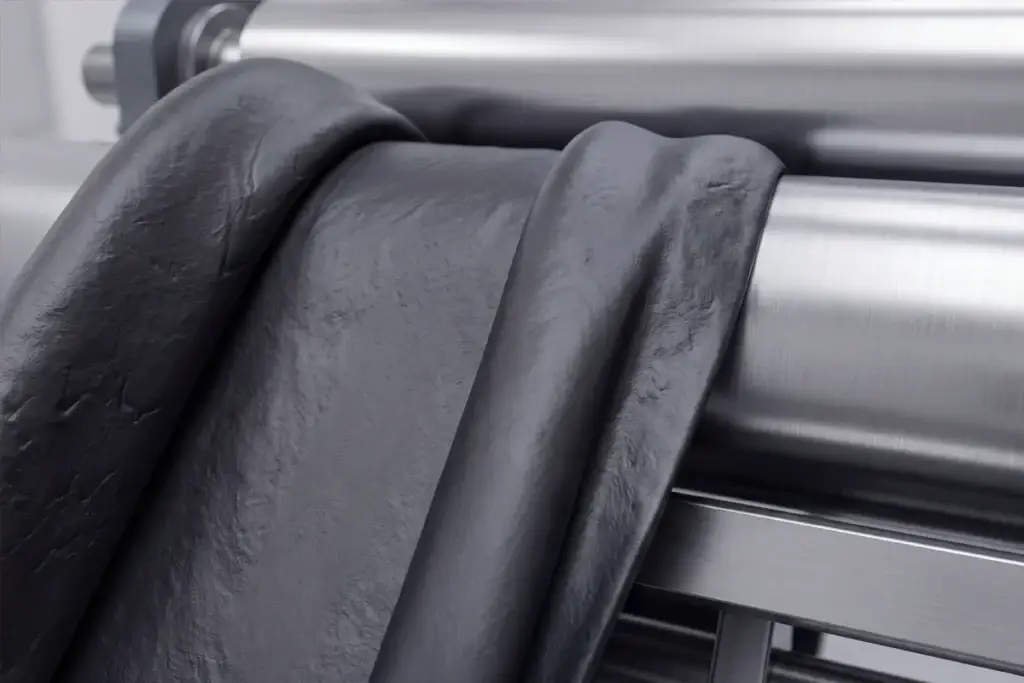
ACM is mainly used in the automotive sector, as the material is resistant to engine, transmission and ATF oils even at higher temperatures. The operating temperature range is –20°C to +150°C.
Like ACM, AEM is frequently used in the automotive sector. AEM offers better low-temperature and heat resistance than ACM and, based on its overall properties, can be classified between ACM and FKM. It provides good resistance to additive-treated mineral oils, water and coolants. AEM also has good weathering and ozone resistance. The operating temperature range is -30°C to +150°C (short-term up to +175°C).
Chloroprenes offer good resistance to ozone, weathering and aging, while also providing good mechanical properties. They show moderate resistance to mineral oils and are suitable for use with many refrigerants. The operating temperature limits are –40°C to +100°C.
EPDM materials generally offer good resistance to hot water, steam, aging and chemicals, as well as a wide thermal application range. They are divided into sulfur-cured and peroxide-cured types, with peroxide-cured compounds offering higher thermal load capacity and significantly lower compression set. EPDM has good resistance to hot water and steam, detergents, sodium hydroxide and potassium hydroxide solutions, silicone oils and greases, many polar solvents, and many diluted acids and chemicals. For glycol-based brake fluids, special grades are recommended. EPDM materials are completely incompatible with all mineral oil products (lubricants, fuels). The operating temperature limits are –45°C to +130°C (–50°C to +150°C for peroxide-cured grades).
Perfluoroelastomers have chemical and heat resistance comparable to PTFE. They combine these positive properties of PTFE with the elastic behavior of FKM. Due to the significantly higher price level of this material group, perfluoroelastomers are used only when other materials can no longer meet the requirements and safety-related aspects justify the higher costs.
Typical application areas for perfluoroelastomers include the chemical, petroleum and semiconductor industries, high-vacuum technology, and aerospace.
FKM materials are characterized by their very high temperature and chemical resistance. They also offer very good aging and ozone resistance, very low gas permeability (making them well suited for vacuum applications) and self-extinguishing fire behavior.
The standard FKM material shows very good resistance to mineral oils and greases, aliphatic, aromatic and chlorinated hydrocarbons, fuels, flame-resistant HFD hydraulic fluids, and many organic solvents and chemicals.
In addition to standard FKM materials, various special compounds are available that are tailored to specific applications through different polymer chain compositions and varying fluorine contents (65% to 71%). In general, FKM is not resistant to hot water, steam, polar solvents, glycol-based brake fluids or low-molecular-weight organic acids.
Fluorosilicone elastomers have mechanical properties similar to silicone, but offer significantly better resistance to oils and fuels. The thermal application range is somewhat more limited compared to silicone. The operating temperature limits are –55°C to +175°C.
HNBR is obtained by full or partial hydrogenation of NBR. This significantly improves heat, ozone and aging resistance and provides very good mechanical properties, such as good wear resistance. Its media resistance properties are comparable to those of NBR. HNBR offers good resistance to some refrigerants. The operating temperature limits are -30°C to +150°C.
NBR is the most widely used material due to its good mechanical properties and resistance to mineral oil-based lubricating oils and greases. Good resistance to fuels is usually only achieved with special compounds. Its properties are largely determined by the acrylonitrile content (ACN between 18% and 50%). A low ACN content provides good low-temperature flexibility but limited resistance to oils and fuels; as the ACN content increases, low-temperature flexibility decreases while oil and fuel resistance improves.
The standard NBR material has a medium ACN content in order to cover a broad range of applications with balanced properties. It offers good mechanical and technological values, such as high abrasion resistance and good resistance to mineral oil-based lubricating oils and greases, hydraulic oils H, H-L and H-LP, flame-resistant hydraulic fluids HFA, HFB and HFC, aliphatic hydrocarbons, silicone oils and greases, and water up to approx. +80°C. NBR is not resistant to aromatic and chlorinated hydrocarbons, fuels with a high aromatic content, polar solvents, glycol-based brake fluids or flame-resistant HFD hydraulic fluids.
Ozone, weathering and aging resistance is low. In the majority of applications, however, for example when the material is wetted with oil, this does not have a negative effect.
Natural rubber is still obtained from the latex of certain plants. Natural rubber vulcanizates offer good low-temperature behavior, good mechanical properties and high elasticity. NR vulcanizates are resistant to water, glycols, alcohols, glycol-based brake fluids, silicone oils and greases, as well as diluted, weak acids and bases. The operating temperature range is approx. –50°C to +80°C.
SBR is used in glycol-based brake fluids, water, alcohols, glycols, silicone oils and greases. The operating temperature range is –50°C to +100°C.
Silicone rubbers are particularly characterized by their wide thermal application range and excellent resistance to ozone, weathering and aging. Compared to other elastomers, the mechanical properties of silicone are rather low. In general, silicone materials are physiologically safe, meaning they are used, among other things, in food-related and medical applications.
The standard silicone material can be used in the temperature range from –55°C to +200°C and is resistant to water (up to 100°C), aliphatic engine and transmission oils, and animal and vegetable oils and greases. In general, silicone is not resistant to fuels, aromatic mineral oils, steam (short-term use up to 120°C is possible), silicone oils and greases, acids or alkalis.
TPU materials stand out from classic elastomers due to their significantly higher mechanical strength. Other outstanding material properties include high abrasion, wear and extrusion resistance, high compressive load capacity, as well as high tear and tear propagation resistance. The TPU material offers good flexibility (even in the upper hardness range) within an operating temperature range of –40°C to +100°C and very good aging and ozone resistance. TPU can be used effectively in mineral oils and greases, hydraulic oils H, HL and HLP, silicone oils and greases, flame-resistant hydraulic fluids HFA and HFB, water up to 50°C, and pure aliphatic hydrocarbons.
plastics
Engineering plastics are used when high mechanical stability, chemical resistance or temperature resistance is required. They are particularly suitable for applications where classic elastomers reach their limits.
Depending on the material, engineering plastics can be used for back-up rings, guide elements, PTFE parts, molded parts or specialty seals.
Polyurethanes stand out from classic elastomers due to their significantly higher mechanical strength. This includes high abrasion, wear and extrusion resistance, as well as high tear and tear propagation resistance. The material is resistant to aging and ozone and can be used in mineral oils and greases, silicone oils and greases, flame-resistant hydraulic fluids HFA and HFB, water up to max. 50°C, and pure aliphatic hydrocarbons.
is a semi-crystalline thermoplastic with high strength and rigidity. The polymer has good sliding properties and wear resistance, as well as low moisture absorption. Its good dimensional stability, particularly good fatigue resistance and excellent machinability make POM a versatile engineering material, also suitable for complex components.
A distinction is made between homopolymers (POM-H) and copolymers (POM-C). Due to their higher crystallinity, homopolymers have a slightly higher density, hardness and strength. Copolymers, on the other hand, offer higher impact strength, greater abrasion resistance and better thermal and chemical resistance.
Properties:
- High strength, rigidity and hardness
- Good impact strength, even at low temperatures
- Low moisture absorption, approx. 0.8% at saturation
- Good creep resistance
- Excellent machinability
- High dimensional stability
- Hydrolysis-resistant up to approx. 60°C
- Wear-resistant
- Very good resilience
Applications:
- Mechanical Engineering
- Precision Engineering
- Food Technology
- Medical Technology
- Bearings and Rollers
- Dimensionally Stable Precision Parts
Polyamides are semi-crystalline thermoplastics with very good mechanical properties, high toughness, and good sliding and wear behavior. Depending on the grade, their properties range from hard and tough, as with PA 66, to soft and flexible, as with PA 12.
Depending on the polyamide grade, moisture absorption can vary. This can affect mechanical properties and dimensional accuracy.
In the production of semi-finished products, a distinction is made between extrusion and casting processes. The casting process allows polyamide semi-finished products to be manufactured in larger dimensions, with a higher degree of crystallization and lower internal stresses. The extrusion process, on the other hand, enables more cost-effective production.
Properties:
- Medium to high strength, hardness, toughness and rigidity
- High mechanical damping capacity
- Good fatigue resistance
- Very good wear resistance
- Good sliding properties
- Generally high moisture absorption
- Generally low dimensional stability
Applications:
- Mechanical Engineering
- Transport and Conveyor Technology
- Packaging and Paper Machinery
- Electrical Engineering
- Gears
- Plain Bearings
- Rollers
PTFE is a semi-crystalline fluoroplastic with exceptionally high chemical and thermal resistance. The material is suitable for temperature ranges from -200°C to +260°C, and briefly up to +300°C.
In addition, PTFE offers very good sliding properties, a non-stick surface and excellent insulating properties. In contrast, it has comparatively low mechanical strength and a higher specific weight than many other plastics.
To improve its mechanical properties, PTFE can be modified with fillers such as glass fiber, carbon or bronze.
Properties:
- Extremely good chemical resistance
- Very good temperature resistance
- Very low coefficient of friction
- Extremely low surface tension
- Difficult to bond
- High thermal expansion
- Comparatively low strength and rigidity
- Low dielectric constant
- Non-flammable
- Physiologically safe
Applications:
- Chemical Plant Engineering
- Transport and Conveyor Technology
- Medical Technology
- Food Technology
- Mechanical Engineering
- Seals
- Linings
- Guide Rails
- Conveyor Belts
PE is a semi-crystalline thermoplastic with high toughness and very good chemical resistance. Compared to other plastics, polyethylene has lower mechanical strength and temperature resistance.
The individual polyethylene types are distinguished by their molar mass, i.e. their molecular weight. This is decisive for their respective physical properties.
Basically, a distinction is made between high-density polyethylene PE 300 (PE-HD), high-molecular-weight polyethylene PE 500 (PE-HMW) and ultra-high-molecular-weight polyethylene PE 1000 (PE-UHMW). As molecular weight increases, toughness, abrasion resistance, chemical resistance, machinability and the operating temperature range improve.
Properties:
- Low density
- High toughness, even in the low-temperature range
- Good wear resistance
- Very low water absorption
- Excellent chemical resistance
- High corrosion resistance
- Non-stick
- Very good electrical insulator
- High vibration damping
- Soft surface
- Long service life
- Physiologically safe
- Black version permanently UV-resistant
- Difficult to bond
Applications:
- Chemical Equipment and Tank Construction
- General mechanical engineering, especially conveyor and drive technology
- Food industry
- Seals
- Packaging and Beverage Industry
- Assembly and Automation Technology
PP-H, polypropylene homopolymer, is a thermoplastic with high strength, rigidity and chemical resistance. Its properties are similar to polyethylene, but PP-H is somewhat harder and more heat-resistant.
The material is available in natural and grey.
Properties:
- Low density
- Very low water absorption
- Excellent chemical resistance
- High corrosion resistance
- High heat deflection temperature
- Relatively high surface hardness
- Very good electrical insulator
- Low oxidation resistance
- Low abrasion resistance
- Sensitive to cold
- Not weather-resistant
- Physiologically safe
- Difficult to bond
- Good weldability
Applications:
- Chemical Equipment and Tank Construction
- Biotechnology and Pharmaceutical Industry
- Die-Cutting Pads
- Pump and Valve Parts
- Medical Technology
PVC-U, rigid polyvinyl chloride, is an amorphous thermoplastic without plasticizers. The material offers high hardness, strength and rigidity, as well as a very good combination of chemical resistance and mechanical load capacity.
This makes PVC-U an economical solution for many industrial applications. Available colors are grey similar to RAL 7011, black, white, red and light grey similar to RAL 7035.
Properties:
- High hardness, strength and rigidity
- High chemical resistance
- Very good electrical insulator
- Normal impact strength
- Good machinability
- Low water absorption
- Good bondability and paintability
- Good weldability
- Easy to thermoform
- Low toughness
- Conditionally weather-resistant
- Flame-retardant
Applications:
- Chemical Equipment and Tank Construction
- Biotechnology and Pharmaceutical Industry
- Ventilation and Fan Engineering
- Electrical and Electronics Industry
- Machine and Equipment Covers
- Pump and Valve Parts
Polycarbonate (PC) is an amorphous thermoplastic from the polyester family. Due to its low degree of crystallization, PC offers high transparency.
The material is characterized by high strength, rigidity and hardness. In addition, polycarbonate has very high impact strength and good heat deflection resistance.
A distinction is made between optical and industrial quality. Optical quality is polished and highly transparent. Industrial quality is a colorless, cloudy and unpolished semi-finished product, but it can also be polished after machining to achieve higher transparency.
Properties:
- Very high impact strength
- High strength and rigidity
- Good heat deflection resistance
- Good electrical insulating properties
- Good machinability
- High dimensional stability
- Susceptible to stress cracking
- Notch-sensitive
- Good bondability
Applications:
- Mechanical Engineering
- Medical Technology
- Electrical Engineering
- Precision Engineering
- Safety Glazing
Polystyrene (HIPS) is an amorphous thermoplastic that is modified with rubber to achieve improved impact strength. The material is easy to process, prints well and offers excellent bondability.
Thanks to its good surface quality and easy processing, HIPS is particularly suitable for applications where appearance, printability and formability are important.
Properties:
- Outstanding surface quality
- Excellent impact strength at low temperatures
- Suitable for Thermoforming
- Flat Surface
- Excellent Printability
- Excellent Electrical Insulating Properties
- Food-safe
Applications:
- Signs of All Types
- Thermoformed Parts
- Screen Printing
- Advertising
Acrylonitrile butadiene styrene copolymer (ABS) is an amorphous thermoplastic with high impact strength, even at low temperatures. The material is hard, scratch-resistant and offers good dimensional stability.
Thanks to its combination of toughness, rigidity and good processability, ABS is suitable for many technical applications where stable and durable plastic parts are required.
Properties:
- High Toughness
- High Rigidity
- Electrically Insulating
- Good Chemical Resistance
- Good Damping Properties
- Low Moisture Absorption
- Good bondability
Applications:
- Electrical Engineering
- Automotive Industry
- Mechanical Engineering
- Precision Engineering
- Cladding
- Covers
PET is a semi-crystalline thermoplastic with high hardness, rigidity and strength. The material offers excellent sliding properties and low sliding wear.
Due to its good creep resistance, very low moisture absorption and high dimensional stability, PET is particularly suitable for complex parts with high requirements for dimensional accuracy and surface quality.
PET is available in white and black. The black version offers improved UV resistance.
Properties:
- High Strength
- High Rigidity and Hardness
- Very Low Moisture Absorption
- Very Low Creep Tendency
- Very High Dimensional Stability
- Excellent machinability
- Low Sliding Friction and Low Sliding Wear
- Hydrolysis-resistant up to approx. +70°C
- Physiologically safe
- Not suitable for contact with media containing more than 50% alcohol
- Good bondability
Applications:
- Mechanical Engineering
- Automotive Industry
- Precision Engineering
- Food Technology
- Transport and Conveyor Technology
- Heavily Loaded Bearings
- Dimensionally Stable Precision Parts
PVDF is an opaque, semi-crystalline thermoplastic fluoropolymer. The material is characterized by excellent chemical resistance, without exhibiting the typical disadvantages of other fluoropolymers in terms of mechanical properties or processability to the same extent.
Compared to other fluoropolymers, PVDF offers lower density, good mechanical strength and a high continuous operating temperature up to approx. 140°C.
Properties:
- Low Density Compared to Other Fluoroplastics
- Good Mechanical Strength Compared to Other Fluoroplastics
- High Continuous Operating Temperature up to approx. 140°C
- Virtually No Water Absorption
- Good Dimensional Stability
- High Chemical Resistance
- Good Hydrolysis Resistance
- Weather-resistant
- Radiation-resistant
- Good Electrical Insulator
- High Abrasion Resistance
Applications:
- Chemical Plant Engineering
- Transport and Conveyor Technology
- Medical Technology
- Food Technology
- Mechanical Engineering
- Electrical Engineering
- Solar Systems
PEEK is a semi-crystalline, high-performance thermoplastic. The material offers very good sliding properties even under thermal load, combined with high mechanical strength.
Thanks to its excellent chemical resistance, high continuous operating temperature and good dimensional stability, PEEK is suitable for highly loaded technical components and demanding operating conditions.
Properties:
- High Continuous Operating Temperature up to approx. 260°C
- High Mechanical Strength
- High Rigidity
- High Creep Resistance, Even at High Temperatures
- Good sliding properties
- High Wear Resistance
- High dimensional stability
- Excellent chemical resistance
- Hydrolysis-resistant
- Good Electrical Insulator
- Radiation-resistant
Applications:
- Chemical Engineering
- Mechanical Engineering
- Electrical Engineering
- Aerospace Engineering
- Automotive Industry
- Food Technology
- Semiconductor Technology
- Vacuum Technology
- High-Temperature Insulators
- Pump Parts
- Valve Seats
- Plain Bearings
- Bearing Shells
- Gears
PPS is a semi-crystalline, high-temperature-resistant thermoplastic. Due to its chemical structure, PPS is a highly resistant polymer with good mechanical strength, even in temperature ranges above 200°C.
In addition to low water absorption, PPS offers good dimensional stability and excellent electrical properties. The material also provides very good chemical resistance, even at elevated temperatures.
Properties:
- High Temperature Resistance
- Very Good Strength and Rigidity
- Low Creep Tendency
- Very Abrasion-resistant
- Very Good Chemical Resistance
- Excellent Electrical Properties
- Low water absorption
- Sensitive to weathering
- High Continuous Operating Temperature up to approx. 170°C
- High Mechanical Strength
- High Rigidity
- High Creep Resistance Across a Wide Temperature Range
- High dimensional stability
- Sehr gute Hydrolysebeständigkeit, geeignet für wiederholte Dampfsterilisation
- Good Electrical Insulator
- Good Radiation Resistance
Applications:
- Elektronik
- Semiconductor Technology
- Aerospace Engineering
- Food Technology
- Medical Technology
- Automotive Industry
- Vacuum Technology
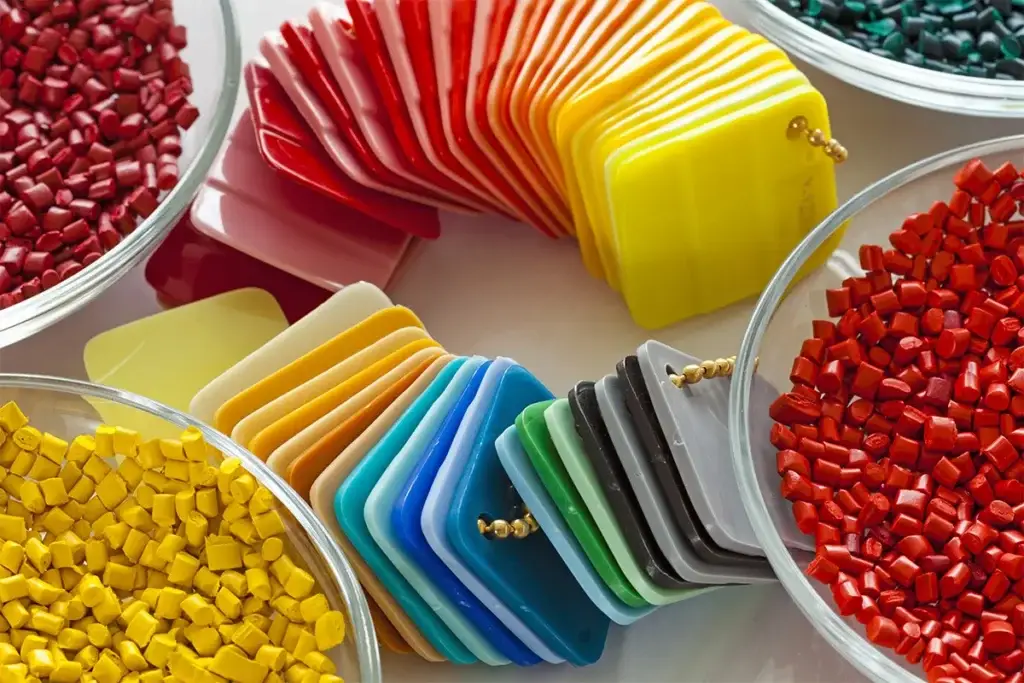
- Plastic Granulates and Samples
Additional Materials and Custom Colors